
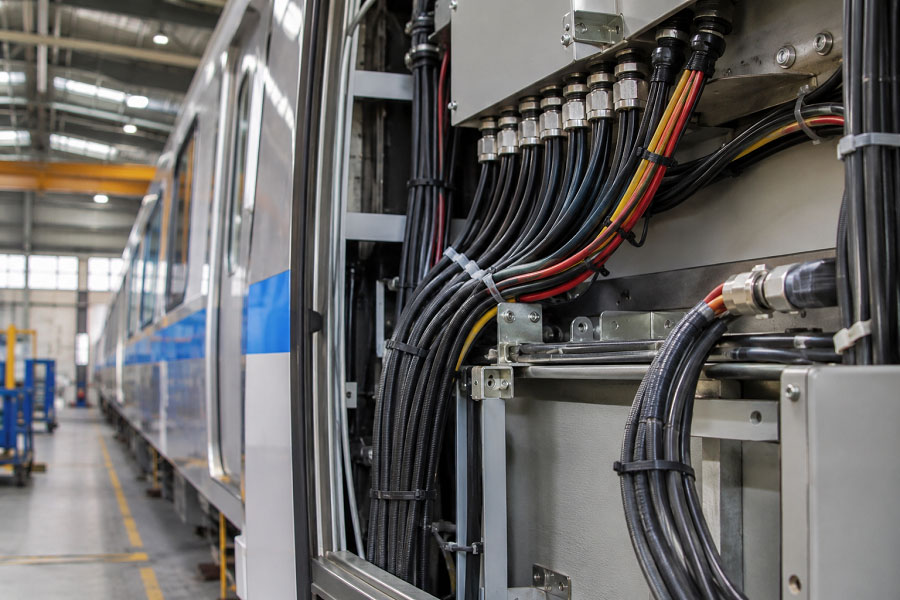
Electrical systems are one of the essential components supporting modern railway operations. From lighting systems, air conditioning, and equipment control to communication between components, all require a stable and reliable electrical network. To ensure that every system operates optimally, specialized cables capable of withstanding railway operating conditions are required. One type of cable designed for these needs is the rolling stock cable.
This is a specialized cable used in rail-based vehicles, such as passenger trains, locomotives, electric trains, and urban transportation systems such as MRT and LRT. Unlike electrical cables used in conventional building installations, this cable is designed with consideration for the characteristics of railway environments, including high levels of vibration, temperature changes, limited installation space, and strict safety requirements.
Proper use plays an important role in supporting the safety, efficiency, and reliability of railway electrical systems. Therefore, cable selection should consider not only electrical conductivity but also material durability, fire safety characteristics, and suitability for the vehicle’s technical requirements.
What Is a Rolling Stock Cable?
This product is a specialized electrical cable designed for use in the electrical systems of rail vehicles. The term rolling stock itself refers to vehicles operating on railway tracks, including locomotives, passenger coaches, freight wagons, and various types of electric trains.
This cable functions as a medium for conducting electrical energy or connecting components within control systems, depending on its type and construction. In modern railway systems, it can be used to support power distribution, lighting, heating, and various electronic equipment required during operation.
Railway operating environments present different challenges compared to conventional electrical installations. When trains are moving, electrical components are continuously exposed to vibration and mechanical stress. In addition, cables may be installed in areas with limited space, near equipment that generates heat, or in environments potentially exposed to oil and certain chemicals.
For this reason, this product requires construction and materials suited to these conditions. Using cables with appropriate specifications helps maintain continuous electrical distribution while reducing the risk of operational disruptions caused by cable damage.
The Role of Rolling Stock Cables in Railway Electrical Systems
The reliability of rail transportation systems is not determined solely by propulsion engines and braking systems. The electrical infrastructure within the vehicle also plays a major role in ensuring that all components can operate in an integrated manner.
This product is an important part of the electrical network because it connects various equipment requiring power supplies or control signals.
Supporting Electrical Power Distribution
One of its main functions is to help distribute electrical energy to various devices installed in rail vehicles.
During railway operations, electricity is required to operate lighting systems, control devices, heaters, and various other supporting equipment. Cables with appropriate current-carrying capacities help ensure that electrical energy can be distributed stably to each component.
The selection of conductor sizes and insulation characteristics must be adjusted to current requirements, voltage, and installation conditions. This is important to prevent overheating and maintain long-term electrical performance.
Connecting Control Systems and Electronic Equipment
Modern trains use increasingly complex control systems to manage various operational functions. Electronic devices, sensors, and control units work in an integrated manner to ensure proper vehicle operation.
Cables used in control circuits serve as connections between components. For certain data communication and signaling requirements, cables with transmission characteristics suitable for the systems being used are required.
With the selection of appropriate cables, communication between devices can take place more consistently and help minimize the risk of disruptions caused by environmental conditions or electromagnetic interference.
Supporting Passenger Comfort
In addition to supporting the vehicle’s technical systems, rolling stock cables also contribute to passenger comfort.
Cabin lighting, heating systems, and several comfort-supporting devices require electrical power during travel. When electrical distribution operates properly, these facilities can function as needed.
In mass transportation systems operating on busy schedules, the reliability of every electrical component is an important factor in maintaining service quality.
Characteristics of High-Quality Rolling Stock Cables
Not all electrical cables are suitable for use in rail vehicles. This product must have certain characteristics to withstand operating conditions that demand high levels of safety and durability.
Several important characteristics to consider include the following.
Resistance to extreme temperatures. Insulation materials must be able to operate within specified temperature ranges without experiencing excessive performance degradation.
Resistance to vibration and mechanical stress. Cables must be suitable for installation conditions and exposure to vibration during vehicle operation.
Fire safety characteristics. Material selection must consider flame propagation, smoke generation, and gases released during a fire.
Resistance to oil and chemicals. In certain areas, cables may be exposed to lubricants, fuels, or other chemical substances.
Appropriate flexibility. Cables must be able to follow installation routes without exceeding specified bending limits and mechanical requirements.
These characteristics must be evaluated comprehensively based on the installation location and function. Cables suitable for fixed installations inside panels may not necessarily be appropriate for vehicle components subjected to repeated movement.
Therefore, understanding product technical specifications is an important step before determining the type of cable to be used.
The Importance of Halogen-Free Materials in Railway Cables
Fire safety is one of the main considerations in designing railway electrical systems. This relates to the characteristics of rail vehicles, which have limited passenger space and require special evacuation procedures during emergencies.
One cable material characteristic frequently considered is halogen-free construction.
Halogen-free materials are designed without the use of certain halogen elements in their formulations. In the context of fire safety, using these materials can help reduce the risk of releasing corrosive acidic gases associated with the combustion of halogen-containing materials.
However, it is important to understand that halogen-free characteristics do not automatically mean that cables are fire-resistant or produce low levels of smoke. Each characteristic must be verified through appropriate testing.
Cables with appropriate fire safety performance can provide important benefits for railway environments, particularly in supporting the protection of passengers, train crews, and electrical equipment.
Therefore, specifications related to insulation materials, sheathing, and fire testing results must be part of the technical evaluation before cables are installed in rail vehicles.
Understanding Rolling Stock Cable Standards for Railway Applications
Their use must take into account technical standards relevant to railway systems. These standards help determine construction requirements, testing procedures, and safety characteristics that cable products must meet.
Several standards commonly referenced in the railway cable industry are as follows.
EN 50264
EN 50264 is a series of standards covering power and control cables for railway rolling stock applications with special fire performance characteristics.
This standard includes requirements for various cable constructions according to their categories and applications. Its implementation helps ensure that the selected cables have technical characteristics suitable for the vehicle’s electrical circuit requirements.
EN 50306
EN 50306 relates to specialized railway rolling stock cables featuring thin-wall insulation construction.
This construction is relevant for applications requiring space and cable weight efficiency without compromising applicable technical requirements.
In modern rail vehicles, optimizing installation space is very important because many electronic and electrical components must be placed within limited areas.
EN 45545-2
EN 45545-2 is a standard covering the fire behavior requirements of materials and components used in rail vehicles.
In cable selection, this standard is relevant for evaluating fire safety characteristics based on the requirements applicable to specific applications.
Applications of Rolling Stock Cables in Various Railway Components
This product can be found in various parts of rail vehicles. The type of cable used depends on voltage requirements, current, flexibility, environmental conditions, and the function of the equipment being connected.
Train Lighting Systems
Lighting is an essential facility required in all types of passenger trains. This system includes cabin lights, door area lighting, and lights installed in certain sections of the vehicle.
The cables used must be capable of supporting consistent power distribution and have safety characteristics appropriate for their installation environments.
Heating Systems and Supporting Equipment
Some rail vehicles are equipped with heating systems or additional electrical devices to support operations and comfort.
Cable installations in these areas require attention to operating temperatures, installation conditions, and potential exposure to heat from surrounding equipment.
Cables with appropriate insulation materials can help maintain electrical performance even when used in environments with relatively high temperatures.
Electrical Panels and Switchgear
Switchgear is equipment used to control, protect, or isolate electrical circuits.
In rail vehicles, cables function to connect components within electrical distribution and control systems. Cable selection must consider circuit characteristics and mechanical and electrical protection requirements.
Well-designed installations help facilitate inspection, maintenance, and cable route identification when necessary.
Electrical Systems in Locomotives and Electric Trains
Locomotives and electric trains have various electrical requirements, ranging from auxiliary circuits to systems associated with vehicle propulsion.
Each application requires different cable specifications. For example, cables used for low-voltage control circuits cannot directly replace cables used in high-power traction systems.
Therefore, their selection must follow the vehicle’s electrical design and the technical requirements established by equipment manufacturers or project operators.
Cross-Linking Technology to Improve Cable Durability
One of the technologies used in specialized cable production is cross-linking, a process that forms cross-links within the polymer structure.
This process can be carried out using several methods, including electron beam cross-linking.
When applied to suitable materials, cross-linking technology can help improve the thermal stability and mechanical characteristics of cable insulation. The final results still depend on the polymer type, material formulation, and manufacturing process.
In railway applications, these characteristics are beneficial because cables may be exposed to temperature changes and challenging operating conditions.
The use of materials processed through cross-linking technology can also support insulation resistance to certain environmental conditions. However, operating temperature limits and chemical resistance must still refer to the specifications of each product.
Therefore, manufacturing technology is one factor that should be considered alongside cable construction and performance testing results.
Important Factors to Consider When Selecting Rolling Stock Cables
The selection of this product should be based on the actual requirements of the electrical system rather than solely on product type or price.
The first step is to understand the cable’s function within the vehicle. Is the cable used for power distribution, control circuits, lighting, or communication requirements? Each application has different technical characteristics.
Next, consider the required operating voltage and current capacity. Determining the conductor cross-sectional area must take into account installation conditions, temperature, cable grouping, and electrical design requirements.
Environmental factors should also not be overlooked. Cables installed near engines or hot components require different characteristics compared to cables installed in more protected areas.
In addition, several important aspects should be checked before purchasing.
Compatibility of product specifications with the vehicle’s electrical design.
Technical standards and testing documents required by the project.
Material resistance to temperature, oil, and environmental conditions.
Cable dimensions, construction, and minimum bending radius.
The manufacturer’s ability to meet technical requirements and procurement quantities.
Considering all these factors can help reduce the risk of selecting unsuitable materials.
In the long term, using appropriate cables can also potentially reduce replacement requirements caused by specification mismatches and help maintain smooth maintenance activities.
KRETAFLEX® Single Core as a Rolling Stock Cable Solution
To support the electrical requirements of rail vehicles, PCM Cable offers KRETAFLEX® Single Core in its rolling stock cable product category.
This product is developed for protected installation applications in rail vehicles and buses, particularly for connecting fixed and partially moving electrical components.
Based on PCM Cable’s product information, KRETAFLEX® Single Core has several characteristics, including halogen-free materials, resistance to oil and fuel, and resistance to acids and alkalis.
This cable also uses an electron beam cross-linking process to support the characteristics of its insulation material.
One of the advantages offered is its ability to operate under high-temperature conditions up to +125°C and withstand low temperatures down to −50°C, in accordance with the product specifications.
This temperature resistance range makes KRETAFLEX® Single Core a relevant option for electrical applications exposed to challenging temperature conditions.
In its applications, this product can be used for electrical connections involving lighting, heaters, and switchgear, as well as other installations that comply with its technical specifications.
The availability of specialized cables such as KRETAFLEX® Single Core provides options for the transportation industry requiring electrical materials with characteristics suited to rail vehicle operating conditions.
Nevertheless, the selection of cable types, sizes, and compliance with standards must still be confirmed based on project requirements and product technical documentation.
Why Is Rolling Stock Cable Quality Important for Railway Reliability?
Disruptions to electrical systems can affect various functions of rail vehicles. In certain situations, cable failures may prevent equipment from operating as intended, increase maintenance requirements, or disrupt operational schedules.
High-quality cables with appropriate specifications can help maintain insulation performance and electrical conductivity throughout their service life. Resistance to mechanical and environmental conditions also supports electrical network stability.
On the other hand, using cables that are not suitable for their intended applications can increase the risk of premature damage, particularly when exposed to temperatures, vibrations, or chemicals beyond their design limits.
To optimize cable service life, proper installation, adequate mechanical protection, and regular inspections in accordance with vehicle maintenance procedures are required.
Through this approach, material quality and installation practices can work together to maintain safety and operational continuity in rail transportation.
PCM Cable, a Cable Solution Partner for the Railway Industry
The demand for rolling stock cables continues to grow as electrical systems and rail transportation technologies become increasingly complex. This makes selecting an experienced cable manufacturer an important consideration in supporting project success.
Established in 1994, PT PCM Kabel Indonesia has more than three decades of experience in supporting cable requirements across various industrial sectors. The company combines engineering expertise with modern manufacturing technology to deliver cable solutions that prioritize quality, reliability, and suitability for customer requirements.
Through its railway cable product category, PCM Cable provides specialized cable options for rail transportation applications, including KRETAFLEX® Single Core, which is designed to support electrical requirements in rail vehicles.
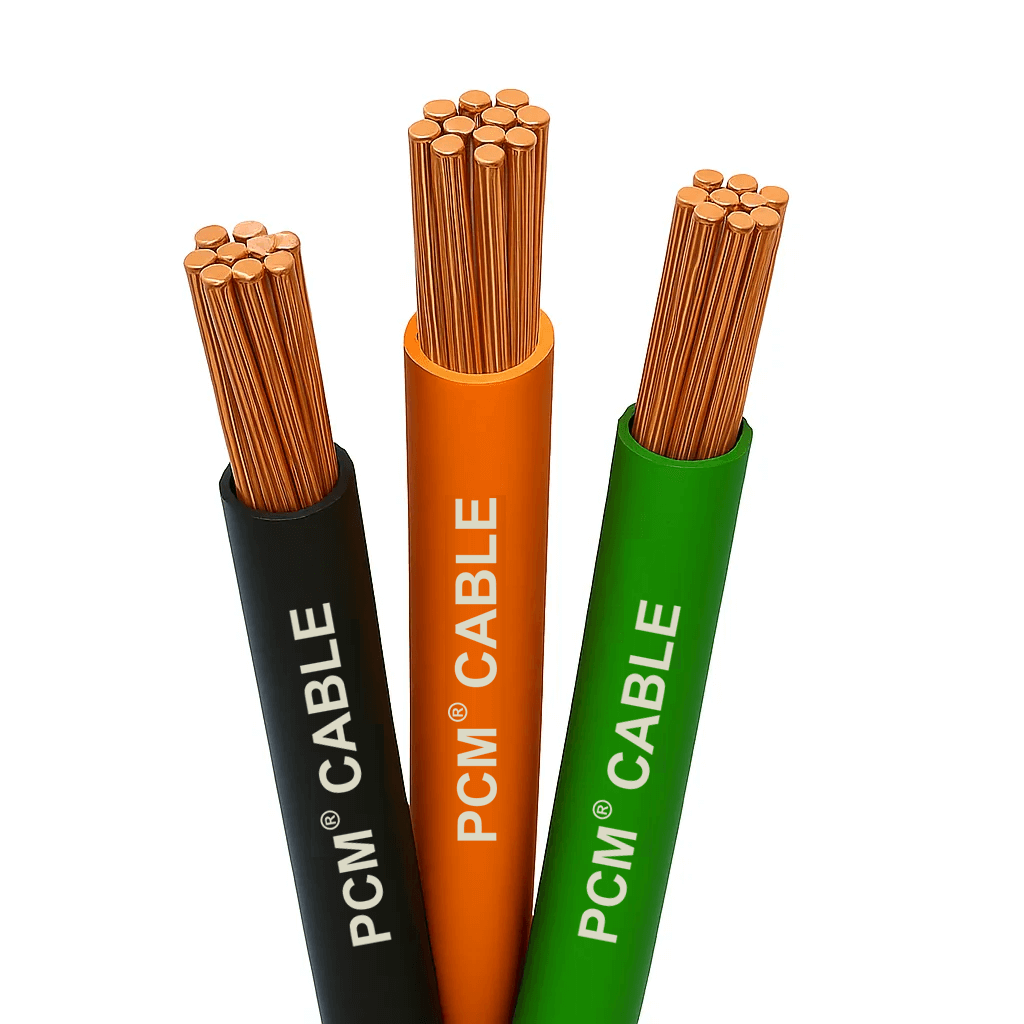
PCM KRETAFLEX® SINGLE CORE
Advantages
Halogen-free
High-temperature resistance, suitable for use up to +125°C
Low-temperature resistance down to −50°C
Resistant to oil and fuel
Resistant to acids and alkalis
Uses an electron beam cross-linking process
Applications
For protected installations inside rail vehicles and buses.
This cable is suitable for connecting fixed and partially moving electrical components, such as lighting, heaters, and switchgear.
This cable can also be used in environments containing oil and under conditions involving higher conductor and ambient temperatures.
Construction
Conductor
Fine-stranded tinned copper conductor, according to VDE 0295 / IEC 60228 Class 5.
Insulation
Electron beam cross-linked polyolefin copolymer, according to EI 109 under EN 50264-1.
Colors
Gray, black, and green-yellow. Other colors are available upon request.
Technical Data
Rated Voltage
U₀/U 0.6/1 kV AC
Uₙ 0.72 kV AC
Maximum Permissible Operating Voltage
U₀ 1.2 kV AC
V₀ 0.9 kV DC
Vₙ 1.8 kV DC
Test Voltage
3.5 kV AC (50 Hz / 5 minutes)
Maximum Conductor Temperature
Fixed installation +125°C
Duration 20,000 hours
Minimum Ambient Temperature / Minimum Bending Radius
Ø < 10 mm → 3 × Ø, at −40°C
Ø > 10 mm → 4 × Ø, at −40°C
Fixed installation for all cables → 5 × Ø, at −50°C
More information about this product can be found at https://pcmcable.com/produk/railway-cables/.
In addition to providing industrial cable products, PCM Cable is also committed to responsive service, flexibility in meeting technical requirements, and support for various industrial projects.
For companies planning cable procurement for railway electrical systems, selecting products with appropriate specifications is an important investment in supporting long-term operational safety and reliability.
If you need further information about cable requirements for railway projects, the PCM Cable team is ready to help you find a suitable solution.
Visit www.pcmcable.com to learn more about the available products and services, or contact our team at the following details.
Phone: (021) 5937-1728 / (021) 5937-1729
Email: sales@pcmcable.com
Instagram: @pcm.cable
