
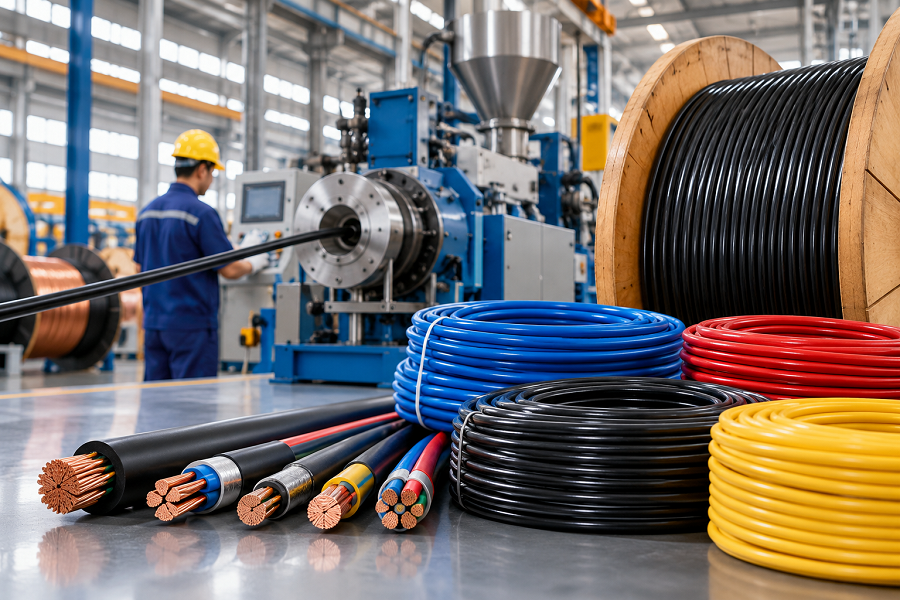
In various industrial projects, selecting the right cable involves more than simply determining conductor size or voltage capacity. Environmental conditions, machinery movement, temperature, chemical exposure, fire risks, and data transmission requirements can all influence the type of cable needed.
For relatively simple installations, standard cables may be sufficient. However, the situation becomes more challenging when cables must operate in environments with constant vibrations, oil exposure, extreme temperatures, or repeated machinery movements involving a high number of operating cycles.
This is where special cables become an essential solution.
Special cables are designed for applications that cannot be optimally supported by conventional cables. Their characteristics can be tailored to specific operating conditions, allowing them to provide performance, safety, and service life that better match the requirements of each application.
So, what exactly is a special cable, what are its characteristics, and when should industries consider using one? Let’s explore the details.
What Is a Special Cable?
A special cable is a cable specifically designed to meet particular technical requirements or environmental conditions that standard cables cannot adequately accommodate.
Unlike conventional cables, which are generally manufactured for electrical power distribution or data transmission under normal conditions, special cables may feature customized conductor designs, insulation materials, shielding, armor, and outer sheaths depending on their intended applications.
For example, cables used in automated machinery must withstand repeated movements. Cables designed for offshore applications require resistance to seawater and harsh environments. Meanwhile, cables used in certain industrial facilities may need additional protection against high temperatures, oil, chemicals, or fire.
Therefore, the term “special” does not simply refer to a different cable shape or construction. The primary difference lies in its technical design, which is developed according to specific application requirements.
What Is the Difference Between Special Cables and Standard Cables?
Standard cables are generally designed for common operating conditions. As long as voltage, electrical current, installation methods, and environmental conditions remain within their specifications, these cables can function effectively.
Special cables take a more application-specific approach. They are typically developed to address challenges associated with particular operating environments.
Factors such as temperature, flexibility, bending radius, movement frequency, exposure to oil, moisture, chemicals, vibrations, fire resistance requirements, and electromagnetic interference may all influence their design.
In other words, special cables are commonly used when operating conditions demand higher levels of performance than conventional electrical installations.
Key Characteristics of Special Cables
Not all special cables share the same characteristics because their specifications depend heavily on their intended functions and operating environments. Nevertheless, several features are commonly associated with specialized cable applications.
1. Higher Mechanical Resistance
In manufacturing and industrial automation, cables may experience pulling forces, friction, bending, twisting, and repeated movements.
When conventional cables are used under such conditions without considering their mechanical design, their conductors or insulation layers may deteriorate more quickly.
Special cables intended for moving applications generally feature more flexible constructions designed to withstand repeated mechanical stress.
2. Resistance to Specific Environmental Conditions
Some special cables are developed for environments that are significantly more demanding than standard installations.
Depending on their design, these cables may withstand extremely high or low temperatures, moisture, ultraviolet radiation, seawater, industrial oils, chemicals, dust, or prolonged outdoor exposure.
Selecting appropriate insulation and outer sheath materials is particularly important because these components provide primary protection against surrounding environmental conditions.
3. Application-Specific Flexibility
In automated machinery, robotic systems, cranes, conveyors, and other moving equipment, cables do not always remain stationary.
They may bend, move, coil, or repeatedly change positions during operation.
For this reason, flexible cables designed for dynamic applications are essential for maintaining electrical performance and signal transmission despite continuous movement.
4. Protection Against Electromagnetic Interference
Modern industrial systems rely on numerous electronic devices, including motors, inverters, sensors, controllers, and communication equipment.
These devices can generate electromagnetic interference (EMI), potentially affecting signal transmission stability.
For control, instrumentation, and data applications, special cables can incorporate specific shielding configurations to help reduce electromagnetic interference.
5. Additional Safety Characteristics
Certain special cables are designed to meet specific safety requirements, including flame-retardant, fire-resistant, low-smoke, or other protective characteristics required in industrial facilities and critical infrastructure.
These features are generally selected according to project standards, installation environments, and operational risks that must be controlled.
Types of Special Cables Based on Their Applications
Special cables cover a broad range of products. They are typically categorized according to their intended functions and operating conditions.
Motion & Automation Cables
Motion and automation cables are used in industrial equipment with components that move continuously.
Common applications include CNC machines, robotic systems, automated production lines, packaging machinery, and material handling systems.
In these applications, cables must continue transmitting electrical power or signals while undergoing repeated bending.
Consequently, their construction is generally more flexible than cables intended for static installations.
Reeling & Festoon Cables
Reeling and festoon cables are widely used in cranes, hoists, port equipment, gantry systems, and other material handling applications.
These cables may be repeatedly wound, unwound, or moved along designated routes.
Because these operations create substantial mechanical stress, the cables must be constructed to support repeated movement without premature deterioration.
Harsh Environment Cables
Harsh environment cables are designed for demanding operating conditions, including offshore platforms, mining operations, energy facilities, ports, chemical plants, and outdoor industrial installations.
In these environments, cables may be exposed to moisture, extreme temperatures, chemicals, oils, or corrosive conditions.
Therefore, their materials must be carefully selected according to the characteristics of the installation environment.
Flat & Flexible Cables
Flat cables feature a relatively flat construction, making them suitable for applications with limited installation space or specific movement paths.
Meanwhile, flexible cables are used when greater flexibility is required compared to conventional cables.
Both types are commonly applied in industrial machinery and systems that require flexibility in installation design.
Data & Control Cables
Not all special cables are designed to transmit electrical power.
Many industrial systems require cables to transmit data, sensor signals, equipment communications, and monitoring or control information.
In these applications, transmission quality is particularly important.
Cable designs may incorporate shielding or specific conductor configurations to help maintain signal stability.
Custom Special Cables
In some projects, commercially available cables may not fully meet the required technical specifications.
A company may need a specific combination of conductor count, conductor size, insulation material, outer sheath, shielding, flexibility, or cable dimensions.
In such situations, custom special cables can be developed based on the application’s requirements.
This approach allows cable construction to be better aligned with operational demands rather than relying exclusively on standard products.
When Should You Use a Special Cable?
Special cables should be considered when operating conditions exceed the normal capabilities of standard cable designs.
One of the most common situations involves repeated cable movement.
When a cable is installed in machinery that continuously bends, reels, moves, or experiences torsion, its construction must be capable of consistently withstanding the resulting mechanical stress.
Special cables are also necessary in demanding environments.
Exposure to high temperatures, extreme cold, chemicals, oils, water, ultraviolet radiation, or excessive humidity can affect cable service life when inappropriate materials are used.
Additionally, special cables become particularly important in systems that require high reliability.
In industrial environments, cable failures can cause machinery to stop operating, resulting in production downtime.
For critical applications, cable selection should consider not only the initial purchase cost but also operational suitability and expected service life.
Special cables should also be considered when signal interference presents a risk.
Industrial environments containing numerous motors, inverters, and electronic devices may generate electromagnetic interference.
For instrumentation, control, and data communication systems, properly shielded cables can help maintain signal stability.
Furthermore, projects with specific safety requirements may need cable characteristics that are unavailable in standard products, such as fire resistance, flame retardancy, or materials designed for particular installation conditions.
Factors to Consider When Choosing a Special Cable
Selecting a special cable requires evaluating multiple technical parameters rather than focusing solely on conductor size or voltage rating.
Several important considerations include:
- Voltage and current requirements.
- Minimum and maximum operating temperatures.
- Static or dynamic operating conditions.
- Bending frequency and minimum bending radius.
- Exposure to oils, chemicals, water, or ultraviolet radiation.
- Shielding requirements.
- Applicable project technical standards.
It is also important to consider how the cable will be installed and operated.
A cable suitable for static installation may not be appropriate for a reeling system or robotic arm.
Similarly, a cable designed for indoor use may not be suitable for outdoor applications or environments exposed to aggressive chemicals.
Therefore, cable selection should always reflect the actual operating conditions of the application.
Why Is Choosing the Right Cable So Important?
Cables may appear to be relatively simple components within an industrial system. However, the failure of a single cable can significantly affect overall operations.
Cable damage may cause signal transmission interruptions, machinery shutdowns, communication failures between devices, increased maintenance expenses, and potential safety hazards.
In industrial operations, the cost of downtime can sometimes exceed the initial investment required for cables with more suitable specifications.
For this reason, special cables should be viewed as part of an overall system reliability strategy rather than merely as additional components.
Special Cables in Modern Industrial Development
Advancements in automation, energy, transportation, telecommunications, and manufacturing systems have made cable requirements increasingly complex.
Today, cables do more than conduct electrical power.
Within a single system, cables may transmit data, control signals, communications, and electrical power simultaneously while withstanding repeated movement or demanding environmental conditions.
These developments continue to increase the need for special cables.
The more specialized an application becomes, the more important it is to ensure that cable design matches its operating characteristics.
With appropriate specifications, special cables can help improve system reliability, maintain transmission quality, and reduce the risk of operational disruptions.
Special Cables Are More Than Just Cables with Different Specifications
Ultimately, special cables are engineered solutions designed to meet application-specific requirements.
They are used when standard products cannot adequately meet mechanical, electrical, environmental, or safety demands.
Because every application has different operating conditions, selecting a special cable requires a comprehensive evaluation of its technical specifications.
Factors such as flexibility, temperature resistance, chemical resistance, shielding requirements, and customized construction must all be aligned with the cable’s intended operating environment.
With the right approach, special cables can help improve reliability, extend installation service life, and support more consistent industrial operations.
Find the Right Special Cable Solution with PCM Cable
For more complex cable requirements, working with a manufacturer that has engineering expertise and manufacturing capabilities is an important consideration.
PT PCM Kabel Indonesia, also known as PCM Cable, has been operating in the cable industry since 1994 and continues to develop solutions for various industrial applications.
Combining decades of engineering experience with modern manufacturing processes, PCM Cable provides cable solutions focused on quality, performance, and reliability.
PCM Cable supports a wide range of special cable requirements, including motion and automation applications, reeling and festoon systems, harsh environments, flexible cables, fire and safety applications, data and control systems, and custom cable solutions designed for specific project requirements.
Its customization capabilities allow cable designs to be adapted to operational, mechanical, environmental, and technical requirements.
If you are looking for special cables for industrial applications, require cables with customized specifications, or need to discuss technical requirements that standard products cannot fully address, PCM Cable is ready to help you find a suitable solution.
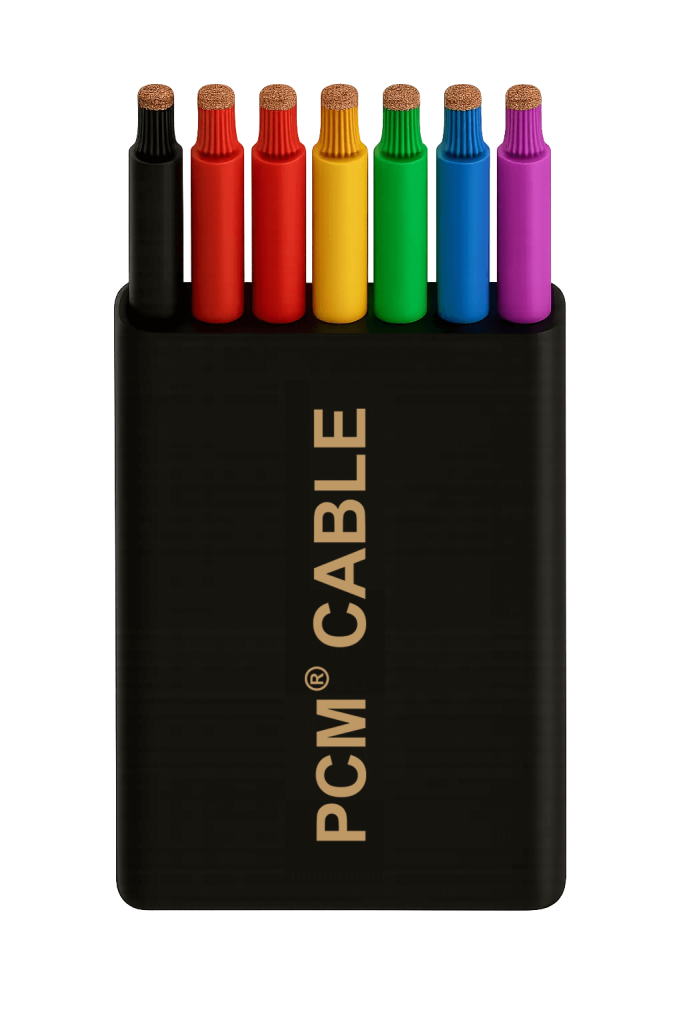
PCM Special Cable
Specialty cables from PCM Cable are specialized wiring solutions designed for specific applications that require unique properties such as high durability, breakage resistance, or resistance to environmental factors.
Penandaan Kabel
- Motion & Automation Cables
- Reeling & Festoon Cables
- Harsh Environment Cables
- Flat & Flexible Cables
- Fire & Safety Cables
- Data & Control Cables
- Custom by request
Visit https://pcmcable.com/en/products/special-cables/ to learn more about PCM Cable’s products and specialized cable solutions.
